

Online Estimates Are a Starting Point, Not a Valuation
Online home estimates have become one of the first places many homeowners and buyers look when they want to understand what a property may be worth. Within seconds, a website can generate a number based on public records, recent sales, property characteristics, and other available data.
That convenience is useful. It can provide a general sense of the market and help someone begin thinking about value before speaking with a real estate professional.
But the number on the screen is still an automated estimate. It is produced by a model that analyzes data, not by someone who has actually walked through the property, studied its condition, or understood the details that make one home different from another.

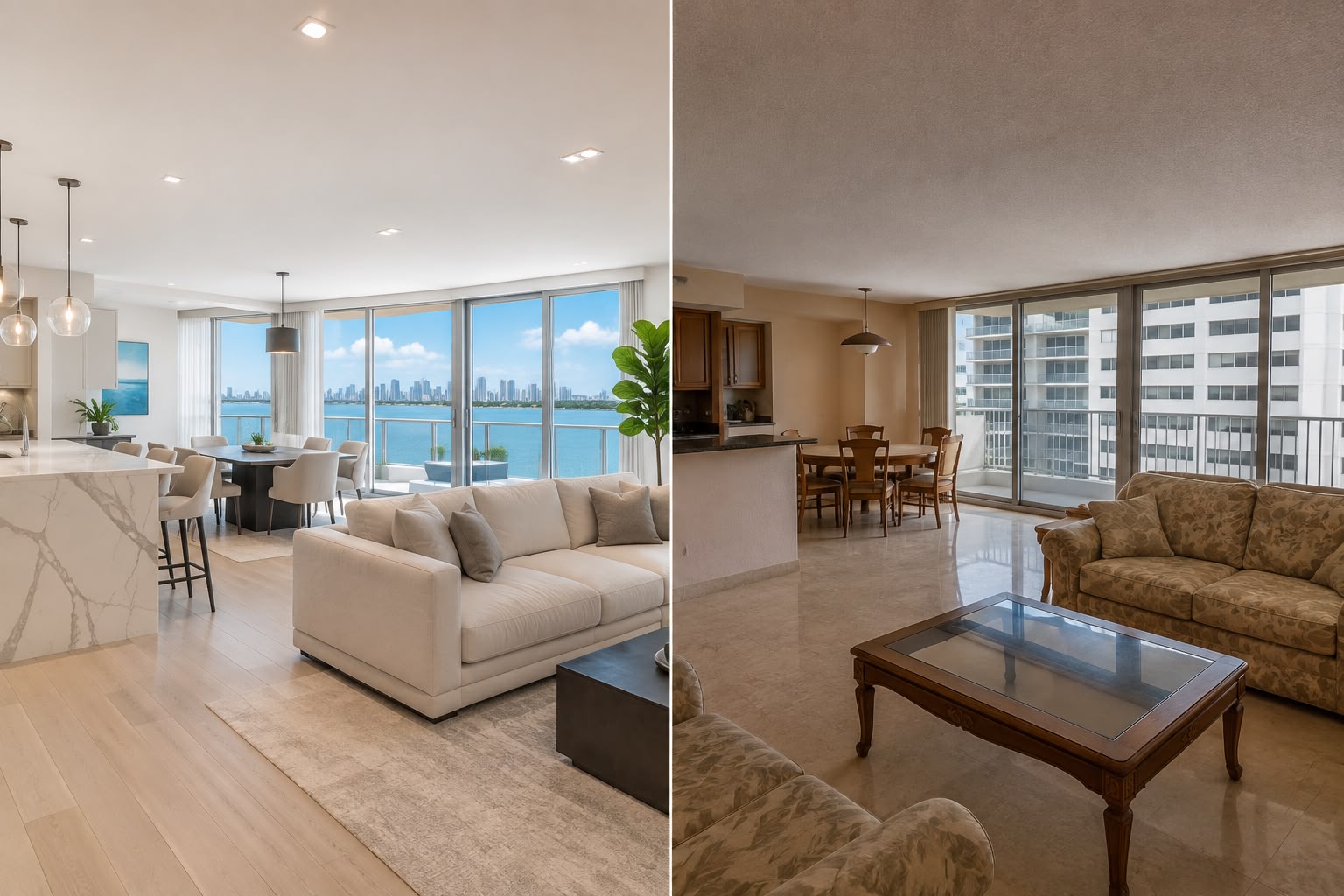
Two properties in the same building may have the same number of bedrooms, similar square footage, and even the same floor plan, yet their actual market value can be very different.
One may have been fully renovated, while the other still has original finishes. One may have an unobstructed water view, while another faces a neighboring building. Floor level, exposure, condition, layout, parking, outdoor space, and quality of renovations can all influence what buyers are willing to pay.
An automated system may recognize some of those differences, but it cannot always measure how much they matter in the current market. That is where the gap between an online estimate and real-world value begins.
Real Estate Value Lives in the Details
Property value is not determined by square footage alone. Buyers react to a combination of tangible and intangible factors, many of which are difficult for an algorithm to evaluate accurately.
Natural light, ceiling height, noise, views, privacy, renovation quality, flow between rooms, and even how a property feels when someone walks through the door can influence demand.
The same is true outside the property itself. The desirability of a particular line in a condominium building, upcoming assessments, the financial condition of an association, recent renovations to common areas, or changes in the surrounding neighborhood can all affect value.
Recent comparable sales also need interpretation. A nearby property may appear to be a perfect comparison on paper but have circumstances that made the sale unusually high or low.
Perhaps it sold furnished, required major renovation, had a special assessment, involved a distressed seller, or included features the subject property does not have. Those details rarely fit neatly into an automated calculation.
Understanding value therefore requires more than finding nearby sales. It requires deciding which sales are genuinely comparable and then adjusting for the differences that buyers are actually paying attention to.
The Market Can Move Faster Than the Data
Another limitation of online estimates is that they rely heavily on information that has already been recorded. Real estate markets, however, can change before those changes are fully reflected in closed sales.
Buyer demand may shift, inventory may increase, mortgage rates may affect purchasing power, or a particular neighborhood or building may suddenly attract more — or less — attention.
A property that would have generated multiple offers several months ago may enter a very different environment today, even if many of the historical sales used by an automated model still look similar.

Current competition matters as well. Sellers are not only competing with properties that sold in the past; they are competing with every attractive home a buyer can choose from right now.
That means active listings, pending sales, recent price reductions, buyer feedback and the pace at which comparable properties are moving can be just as important as historical sales when determining a realistic value.
The strongest pricing decisions combine data with context. Technology can help organize information quickly, but understanding what that information means in today’s market still requires analysis.
Closing Thought
Online estimates are useful tools, and there is nothing wrong with checking them. The problem begins when a single automated number is treated as the definitive value of a property.
Every home has details that a database may not fully understand, and every market has conditions that can change faster than an algorithm can reflect.
The most accurate picture of value comes from combining technology, recent market data, comparable sales and a careful look at the property itself. A number can be generated instantly. Understanding what a home is really worth takes a little more work.