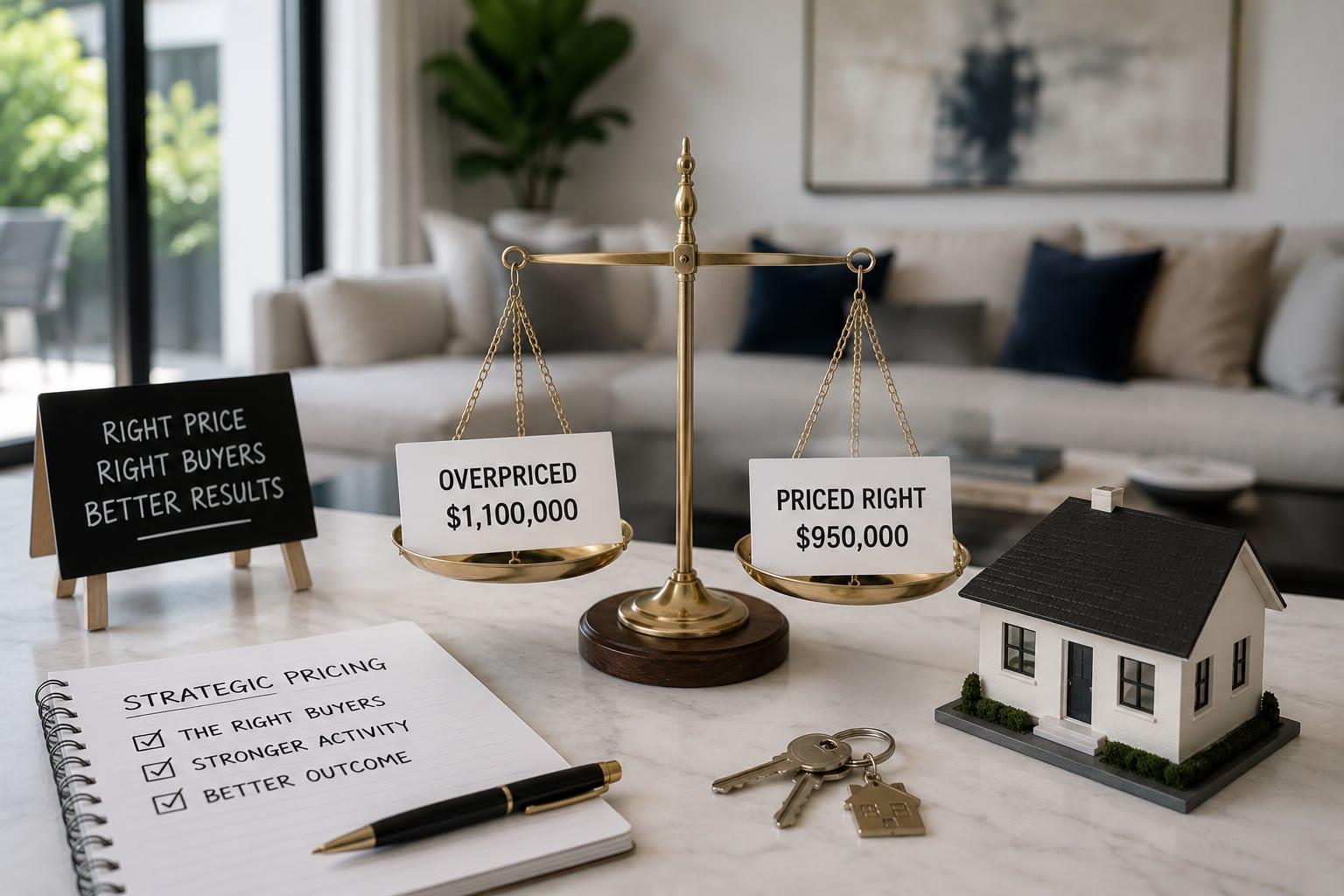

1. Pricing High Can Feel Safe — But It Changes Who Sees Your Home
When homeowners decide to sell, wanting the highest possible price is completely natural. A home often represents years of investment, improvements and financial commitment, so starting a little higher can feel like the safest strategy.
The problem begins when “aiming high” places the property above what the current market is actually prepared to support. It may seem harmless because the price can always be reduced later, but the initial asking price influences the entire way a property enters the market.
 Pricing is not simply choosing a number. It determines which buyers discover the property, what homes they compare it with and whether the listing feels appropriately positioned from the moment they see it.
Most buyers search within defined price ranges. A buyer looking up to $1 million may never see a home listed at $1.1 million, even if that property eventually reduces into their range.
At the same time, buyers shopping around $1.1 million will compare that home with other properties available at that level. If those alternatives offer better renovations, location, views or features, the overpriced property can immediately feel less competitive.
That is why strategic pricing is not about pricing a home cheaply. It is about putting it in front of the right buyers, against the right competition, at a price that makes its value understandable.
2. The Longer a Home Sits, the More the Conversation Changes
A newly listed home has something that cannot be recreated later: freshness. Buyers who have been searching receive alerts, agents notice the new inventory and the property enters the market at the moment of maximum curiosity.
When it remains available longer than comparable homes, the questions begin. Why has it not sold? Is something wrong with it? Have other buyers seen something I have not? Is the seller unrealistic about price?
There may be absolutely nothing wrong with the property. The original asking price may have been the only issue. But buyers do not know that, and in real estate, perception can influence behavior very quickly.
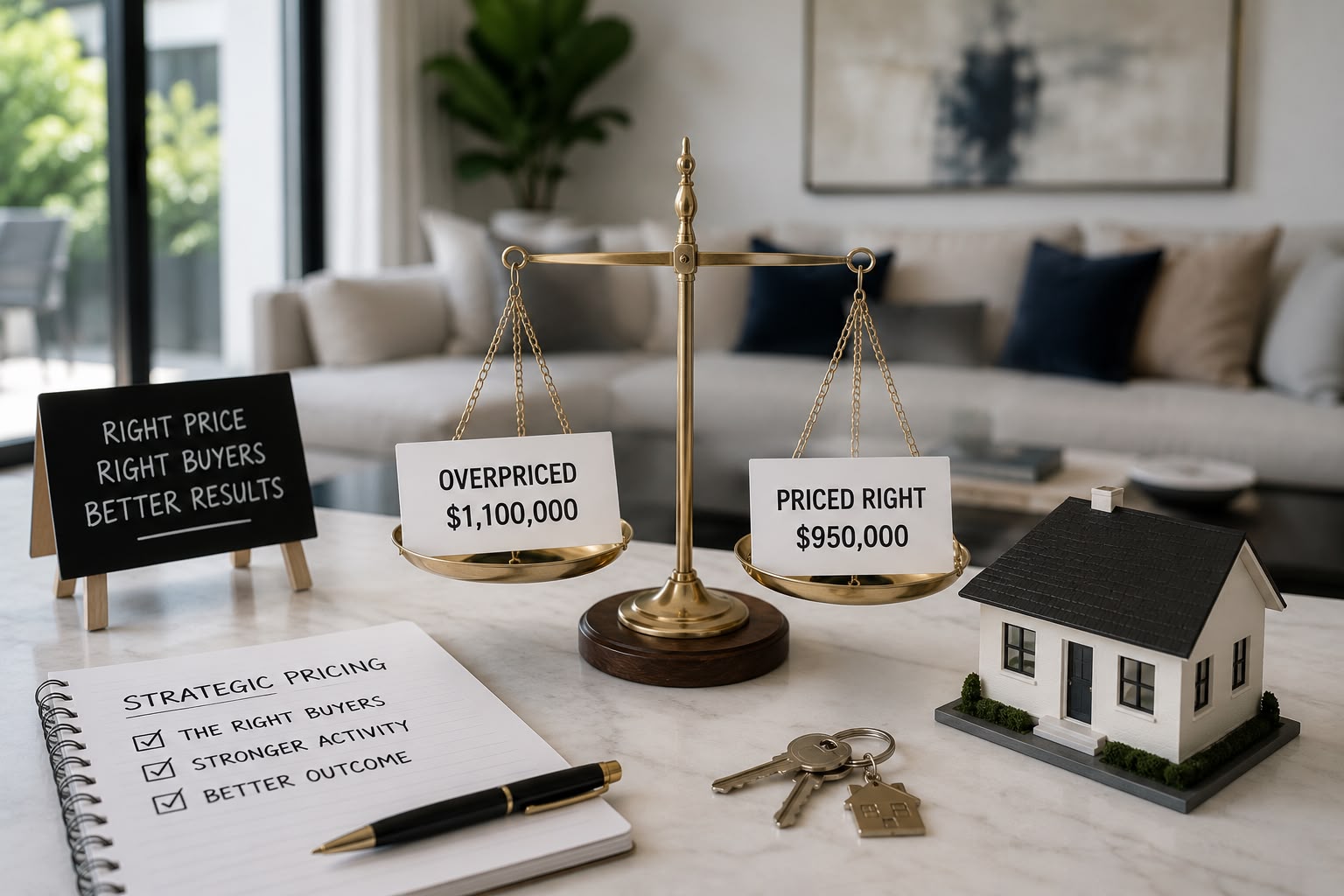
A price reduction can certainly bring a property into a more appropriate range and introduce it to a new group of buyers. But it does not completely recreate the effect of launching correctly from the beginning.
Multiple reductions can create another problem. Instead of generating urgency, buyers may begin to wonder whether another reduction is coming and decide to wait.
That gradually shifts negotiating power. A buyer looking at a fresh, desirable listing may worry about losing it. A buyer looking at a property that has been sitting for months may wonder how much further the seller can be pushed.
3. A Higher Asking Price Does Not Necessarily Mean a Higher Sale Price
This is where pricing strategy becomes especially important. The objective should never be simply to choose the highest asking price that can somehow be justified.
The real objective is to position the home so that qualified buyers respond. Strong activity creates options for a seller; weak activity reduces them.
When a property is priced appropriately, more buyers may consider it seriously, showings can increase and, when the market supports it, competition between buyers can develop.

Overpricing can create exactly the opposite situation. Fewer buyers engage, offers may arrive well below asking and the seller can gradually lose the leverage they hoped to gain by starting high.
Eventually, the price may be reduced to where the property should have been positioned originally. By then, however, the listing has accumulated market time and buyers have already formed an opinion about it.
In some cases, the result can be particularly frustrating: a seller who started high hoping to protect their equity ultimately accepts less than they might have achieved with a stronger strategy from day one.
Closing Thought
The right price is not the lowest price, and it is not necessarily the highest price either.
It is the price that reflects the property, the competition, recent sales and what buyers are actually doing in the market today.
A successful pricing strategy is not about testing how much the market will tolerate. It is about positioning a home so buyers recognize its value and are motivated to act.